
Books
"Family Separation and Detention: A Rant" and Other Selected Poems, Latinx Spaces, August 7, 2018.
“That’s Just Like Here, at Our College’: Tracking Latina/o Inequality from High School Programs to Honors Colleges,” New Directions: Assessment and Preparation of Hispanic College Students, co-edited by A. G. de los Santos, G. F. Keller, R. Tannenbaum, and A. Acerada. Bilingual Press Hispanic Research Center, Arizona State University, 2018, pp. 123-139.
Uprooting Valhalla & Religious Transformations


Through nearly two hundred interviews, this book addresses today’s so-called achievement gap by going directly to the source. At one California public high school where the controversy is lived every day, students, teachers, and parents describe the very real disparities—in opportunities, status, treatment, and assumptions—that fuel more than just gaps in achievement.
Academic Profiling
Based on in-depth interviews with Latina/o teachers, this book offers an insider's perspective on the educational system. Teachers’ stories provide valuable insights gained from their experiences first as students and then as K-12 educators.
Learning from Latino Teachers

Latino LA
This volume highlights the many factors that have transformed the Latina/o presence in LA from primarily Mexican-origin to one that includes peoples from throughout the hemisphere. Bringing together scholars from a range of disciplines, it combines historical perspectives with analyses of power and inequality to demonstrate how Latinas/os are responding to exclusionary immigration, labor, and schooling practices and actively creating communities. Latino Los Angeles is an important work on the changing face of America’s largest western metropolis.
Becoming Neighbors
Focusing on the Mexican-origin, working-class city of La Puente in Los Angeles County, California, this book examines Mexican Americans' everyday attitudes toward and interactions with Mexican immigrants. In-depth interviews and community participation illustrate the centrality of women in building communities and struggling for educational justice, especially bilingual education.

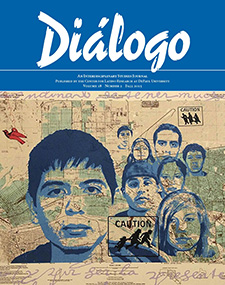
Diálogo
This co-edited journal issue on Queer and LGBT communities and the undocumented crossings of Indigenous and Black immigrants centers the people, topics, and theories often ignored within immigration scholarship, policy debates, and dominant discussions.